Best Kitchen Cabinet Materials for Your Home
Cabinet problems usually show up long before a full kitchen remodel starts. Doors begin to sag, corners swell from moisture, drawer fronts chip, and the finish starts looking tired even after cleaning. When homeowners ask about the best kitchen cabinet materials, they are usually trying to avoid paying twice - once for the install, and again for repairs or replacement.
The right material depends on how your kitchen is used, how long you plan to stay in the home, and how much wear your cabinets need to handle. A busy family kitchen has different demands than a light-use rental, and a custom paint-grade finish calls for a different cabinet box than a budget-conscious update. Material choice affects durability, appearance, maintenance, and cost, so it is one of the most important decisions in the project.
What matters most when comparing the best kitchen cabinet materials
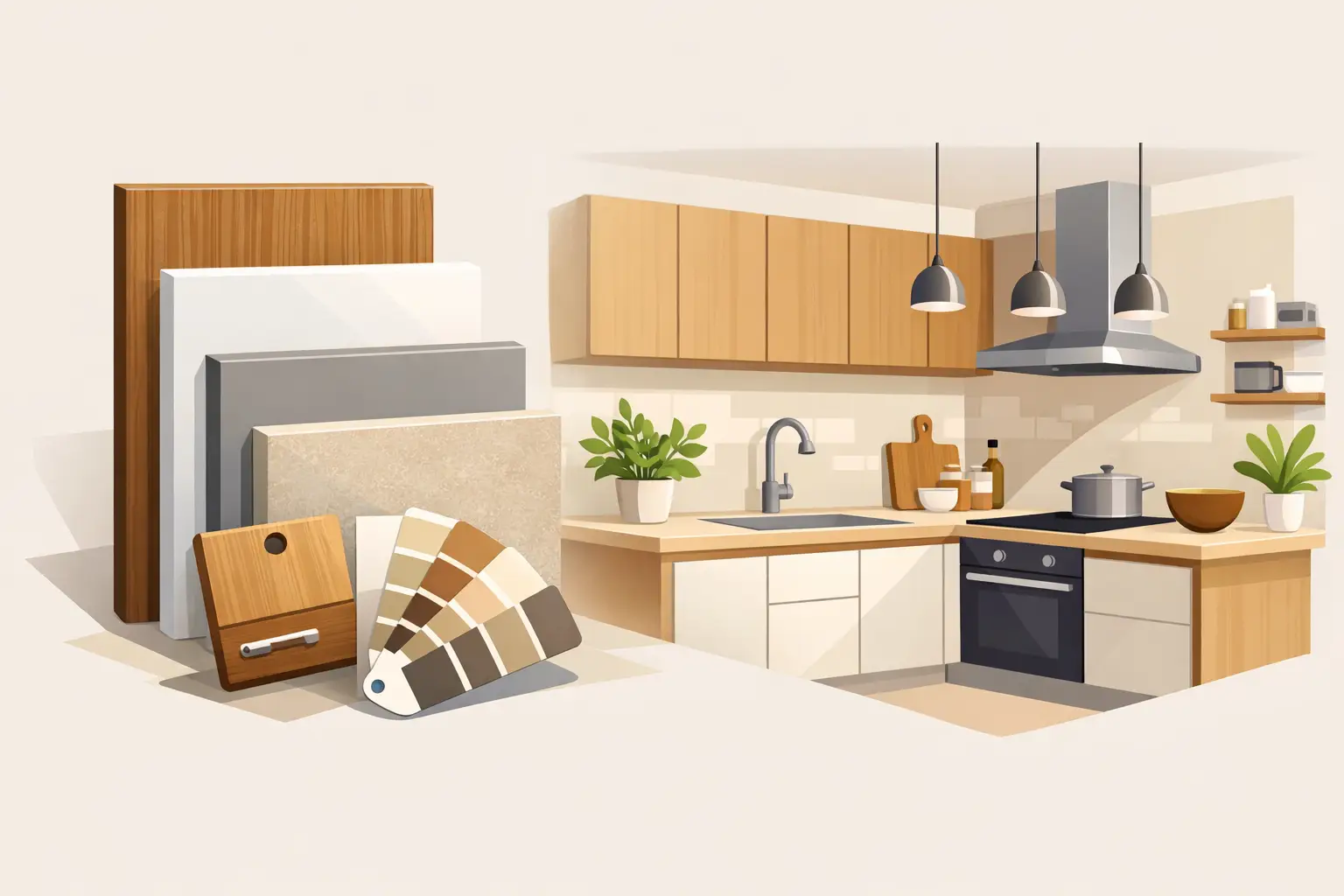
Most cabinet systems are made from more than one material. The cabinet boxes may be plywood or particleboard, the doors may be solid wood or MDF, and the interior shelves may be something else entirely. That is why it helps to look at cabinets in parts instead of assuming one label tells the whole story.
For most homeowners, the main factors are moisture resistance, strength, finish quality, and price. Kitchens deal with steam, spills, grease, frequent opening and closing, and daily impact around sink bases, drawer banks, and lower cabinets. A material that looks fine in a showroom may perform very differently after years of normal use.
It also helps to separate short-term savings from long-term value. A lower-cost cabinet can make sense in some remodels, but not if it swells, loosens, or shows damage early. Good cabinet material selection is not about buying the most expensive option. It is about matching the material to the job.
Plywood cabinets
Plywood is one of the most reliable options for cabinet boxes, and for many remodels it is the practical benchmark. It is made from thin layers of wood veneer glued together in alternating directions, which gives it good dimensional stability and strength.
In kitchens, plywood performs well because it resists sagging better than many lower-cost engineered boards and generally handles normal humidity changes well. It is a strong choice for base cabinets, sink cabinets, and larger spans where shelf strength matters. If you want cabinets that feel solid and hold up well over time, plywood is often worth the added cost.
That said, not all plywood is equal. Lower-grade plywood can have more voids, thinner face veneers, or rougher edges. It also costs more than particleboard and sometimes more than MDF, so it may not fit every budget. But for homeowners planning to stay in the home, plywood cabinet boxes are often one of the smartest investments in the kitchen.
Solid wood cabinets
Solid wood is most often used for cabinet doors, drawer fronts, and visible trim, not always for the full cabinet box. It remains a popular option because it looks substantial, can be refinished in some cases, and works well in traditional, transitional, and many custom kitchen styles.
Hardwoods like maple, oak, cherry, hickory, and birch each have different grain patterns, hardness, and finishing characteristics. Maple is a common choice for painted or stained cabinetry because it is durable and has a relatively smooth grain. Oak is strong and distinct in appearance, while cherry offers a richer look that changes with age.
The trade-off is movement. Wood naturally expands and contracts with humidity, especially in climates where indoor conditions change throughout the year. In Florida-facing markets, moisture matters. A well-made solid wood door can perform very well, but wood still needs proper finishing and installation. It also comes at a higher price than many engineered options.
MDF cabinets
Medium-density fiberboard, or MDF, is an engineered wood product made from wood fibers and resin compressed into dense panels. It is widely used for painted cabinet doors, drawer fronts, and some cabinet components because it has a very smooth surface and does not show wood grain through paint.
If the goal is a clean painted finish, MDF often performs better visually than some natural woods. It is less likely to show grain telegraphing, and it can create a crisp, consistent look on shaker-style or slab-style cabinet doors. For homeowners who want a bright white or solid-color painted kitchen, MDF is a common and sensible choice.
Its weakness is moisture. MDF can swell badly if water penetrates the surface or edges, and once that happens, it usually cannot be repaired cleanly. It is also heavier than some other options. Around sink areas, leak-prone zones, or rough-use conditions, that risk matters. MDF is not a bad material, but it needs the right application and proper sealing.
Particleboard cabinets
Particleboard is made from wood particles and adhesive pressed into sheets. It is one of the most affordable cabinet materials and is often used in stock or lower-cost cabinet lines, especially for cabinet boxes with laminate or thermofoil finishes.
The main advantage is price. For basic remodels, rentals, or projects where keeping costs down is the top priority, particleboard can help bring the project within budget. When manufactured well and kept dry, it can serve its purpose.
But it is generally the least durable of the common cabinet core materials. It is more vulnerable to water damage, screw pull-out, and edge breakdown over time. In a kitchen, especially around plumbing, dishwashers, and high-traffic lower cabinets, those limitations are hard to ignore. If you are comparing the best kitchen cabinet materials for long-term value, particleboard is usually not the first choice.
Thermofoil and laminate surfaces
Some homeowners ask about cabinet materials when they are really comparing cabinet finishes. Thermofoil and laminate are not core materials by themselves. They are surface finishes applied over engineered substrates such as MDF or particleboard.
Thermofoil cabinets have a vinyl-like coating heat-sealed over the door surface. They are easy to clean and often affordable, which makes them common in lower- to mid-range kitchens. The concern is heat and peeling. Near ovens, toasters, or other hot areas, thermofoil can loosen or delaminate over time.
Laminate is usually more durable than thermofoil and comes in a wide range of colors and patterns. It works well for modern looks and can be a practical low-maintenance option. The appearance, though, may not have the same depth or repairability as painted wood or stained wood. For some homeowners that is perfectly fine. For others, it can feel less substantial.
Which cabinet materials work best in real kitchens
For many homes, the strongest overall combination is plywood cabinet boxes with solid wood or MDF doors, depending on the finish. That gives you a durable structure and lets you tailor the door material to the look you want.
If you want stained cabinets, solid wood doors are usually the better fit because natural grain is part of the finished appearance. If you want painted cabinets, MDF doors often provide a smoother result, though some homeowners still prefer wood for impact resistance and repair options. There is no single answer for every kitchen.
Budget matters too. A full plywood and solid wood cabinet package may not make sense for every project. Sometimes a mixed-material cabinet line gives the best value - strong where it counts, cost-conscious where performance demands are lower. That is often the most practical way to approach remodeling.
How to choose the best kitchen cabinet materials for your remodel
Start with use, not just appearance. Think about whether this kitchen handles heavy daily traffic, kids, frequent cooking, or moisture around sink and dishwasher areas. Those conditions should carry more weight than showroom appearance alone.
Next, think about finish. Painted cabinets and stained cabinets do not behave the same way because the substrate matters. A beautiful paint sample does not tell you what the core material is doing underneath.
Then look at lifespan. If this is your long-term home, stronger cabinet box construction usually pays off. If the remodel is part of a property refresh before sale, the right answer may be different. A good contractor should be able to explain those trade-offs clearly instead of pushing one option for every job.
At AP Interior Solutions, that practical approach matters because kitchen remodeling decisions affect more than the cabinets themselves. Drywall condition, paint finish, flooring transitions, and overall installation quality all shape how the final space performs and looks.
The best cabinet material is the one that fits your kitchen, your budget, and the level of durability you actually need. If you choose with that in mind, you are far more likely to end up with a kitchen that still works well and looks right years after the project is done.
Planning a project in South Florida?
AP Interior Solutions remodels kitchens and bathrooms and delivers flawless painting and drywall across Broward, Miami-Dade and Palm Beach. Free in-home estimates, English y español.