Laminate Flooring Versus Hardwood Costs Explained

A flooring quote can look simple until the old floor comes up, the subfloor needs attention, and trim work enters the picture. When comparing laminate flooring versus hardwood costs, homeowners should look beyond the price of the planks. Material, installation method, room conditions, long-term maintenance, and expected time in the home all affect which option delivers the better value.
For many Florida homeowners, laminate is the practical choice for a visible upgrade on a controlled budget. Hardwood can be the right investment when natural material, refinishing potential, and long-term resale appeal justify the higher upfront cost. The best choice depends on the room and the project goals, not just the cost per square foot.
Laminate Flooring Versus Hardwood Costs at a Glance
Laminate flooring generally costs less to purchase and install than hardwood. A basic laminate product may cost about $1 to $3 per square foot for materials, while higher-quality water-resistant laminate can run from $3 to $6 or more per square foot. Professional installation commonly adds about $2 to $5 per square foot, depending on room layout and preparation needs.
Solid hardwood often starts around $3 to $8 per square foot for materials, with premium species, wider boards, and specialty finishes costing $10 to $15 per square foot or more. Installation can add $4 to $10 per square foot because hardwood requires more precise fitting, fastening, and acclimation. On a straightforward project, a homeowner may spend roughly $3 to $11 per square foot installed for laminate and $7 to $22 or more per square foot installed for hardwood.
Those ranges are useful for early budgeting, but they are not a final project price. A small room, an uneven concrete slab, furniture moving, floor removal, transitions, baseboard work, and moisture preparation can change the total quickly.
Why the Installed Price Matters More Than the Plank Price
Two floors with similar material prices can have very different installation costs. Laminate is usually a floating floor. The planks lock together over an underlayment and do not need to be nailed or glued directly to the subfloor in most applications. That can reduce labor time, especially in open rooms with sound, level surfaces.
Hardwood installation is more demanding. Solid wood must acclimate to the home before installation so it can adjust to indoor conditions. It may be nailed, stapled, or glued, depending on the product and subfloor. Installers also need to plan board direction, transitions, expansion space, and details around doorways and cabinets.
The condition of the subfloor is a major cost factor for either material. Laminate needs a clean, flat surface so the locking joints do not separate or flex. Hardwood needs a stable, dry substrate to prevent movement and damage. Leveling compounds, plywood repairs, moisture barriers, or slab preparation are not extras to skip. They protect the finished floor and help avoid callbacks later.
Costs that are often left out of early estimates
Homeowners should ask whether a quote includes demolition, disposal, underlayment, moisture protection, baseboards or shoe molding, transitions, furniture moving, and floor-height adjustments at doors. These items can add meaningful cost, particularly when replacing tile or when the new floor meets existing cabinetry and adjacent rooms.
For a whole-home flooring project, completing these details under one remodeling contractor can also reduce coordination problems. Flooring, drywall repairs, painting, and trim touch-ups often overlap once the work begins.
Laminate Has a Lower Entry Cost, but Quality Varies
Laminate is not one product category with one level of performance. Entry-level laminate can provide a quick visual improvement in a low-traffic room, but it may have a thinner wear layer, less realistic texture, and less protection at the edges. Better laminate products usually have stronger locking systems, thicker cores, improved scratch resistance, and water-resistant construction.
That difference matters in active households. A lower-priced floor may cost less today but can show wear sooner in hallways, living rooms, and homes with pets or children. Spending moderately more for a reputable, water-resistant laminate is often a better value than choosing the least expensive option available.
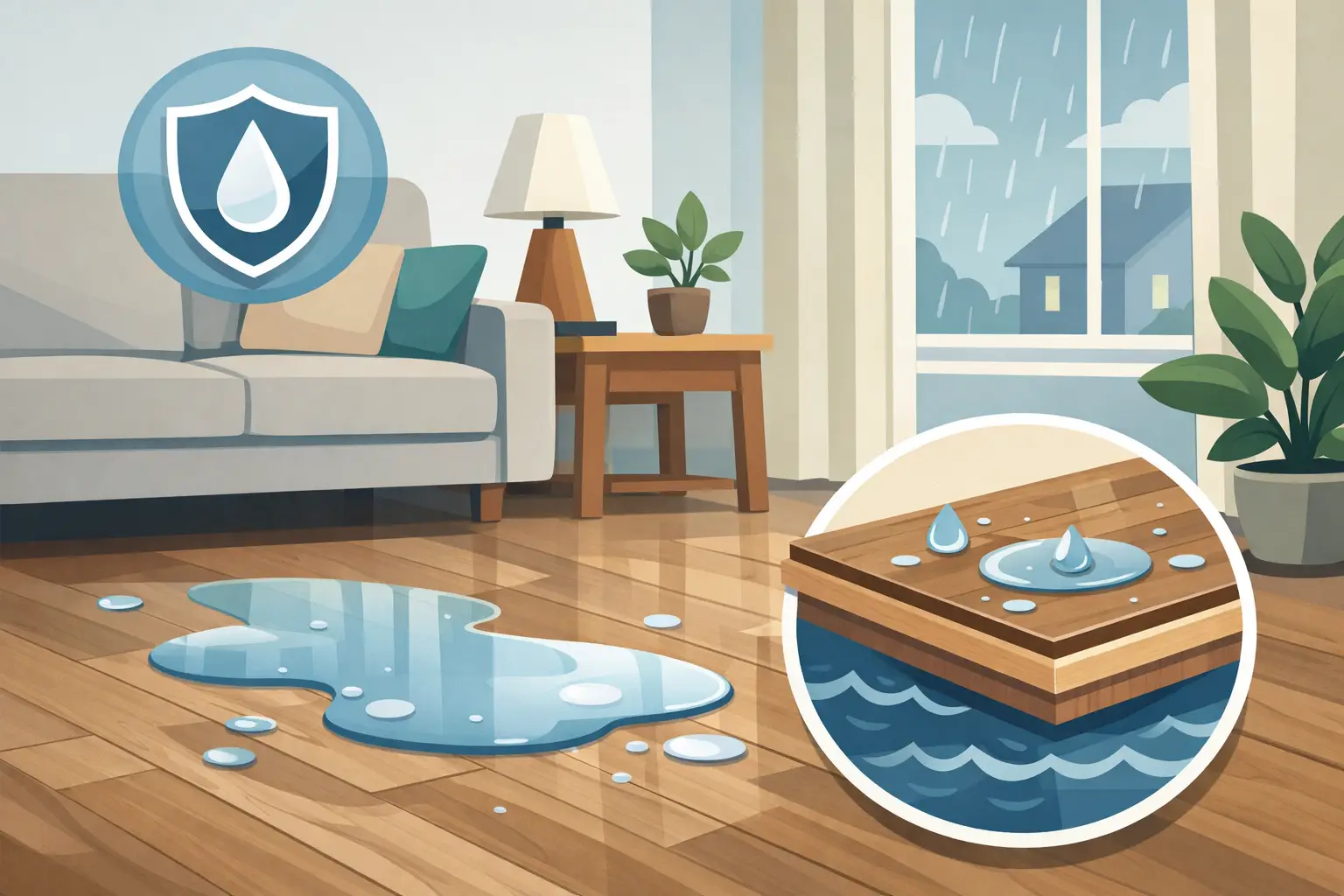
Laminate should not be treated as waterproof unless the manufacturer specifically states that it is suitable for the intended use. Water that enters seams or remains on the floor can cause swelling and edge damage. In kitchens, laundry rooms, and entry areas, product selection and installation details matter.
Hardwood Costs More Because It Is a Long-Term Material
Hardwood costs more partly because it is a natural product and partly because it can remain in service for decades when properly maintained. Solid hardwood can usually be sanded and refinished multiple times. Engineered hardwood has a real wood surface over layered construction, but the ability to refinish it depends on the thickness of that top layer.
This repair and refinishing potential changes the long-term calculation. Scratched laminate generally cannot be sanded and renewed. If it is badly damaged, affected boards or the entire floor may need replacement. Hardwood can develop scratches and dents too, but many homeowners accept those marks as normal wear or restore the surface later.
The higher cost of hardwood does not automatically make it the better purchase. A family planning to sell within a few years, update a rental property, or refresh several rooms on a fixed budget may get more immediate benefit from quality laminate. A homeowner creating a long-term primary residence may find hardwood worth the added investment.
Florida Conditions Can Change the Recommendation
Florida homes bring humidity, moisture, and cooling-system conditions into the flooring decision. Solid hardwood can perform well when it is installed correctly in a climate-controlled home, but it is more sensitive to moisture changes than many manufactured products. Excess moisture can lead to cupping, gaps, or movement.
For homes built on concrete slabs, installers need to test moisture and use the correct preparation methods. Engineered hardwood may be more suitable than solid hardwood in some situations, especially where the installation method or slab conditions make solid wood less practical. Laminate can also work well over a properly prepared slab, but it still requires a suitable underlayment and moisture barrier where needed.
Neither floor is the right answer for every wet area. For bathrooms with frequent water exposure, homeowners should consider materials designed specifically for that environment. The floor should fit the room's actual use, not just the look of the sample board.
Maintenance and Replacement Costs Over Time
Laminate is easy to maintain. Regular sweeping or vacuuming with a hard-floor setting, along with a lightly damp cleaner approved for laminate, is usually enough. Avoid soaking the floor, abrasive tools, and wax-based products. Its wear layer can resist everyday scuffs well, making it a practical option for busy rooms.
Hardwood needs more attention to moisture, scratches, and finish care. Area rugs, furniture pads, prompt spill cleanup, and proper cleaning products help protect the surface. Periodic refinishing is an additional future expense, but it can restore a worn wood floor instead of requiring full replacement.
The key question is whether you prefer a lower initial cost and simpler replacement path, or a higher initial cost with the potential to renew the floor over time. There is no universal winner.
How to Budget for the Right Flooring Choice
Start by measuring the entire area, then add material for cuts, waste, and future repairs. A simple rectangular room requires less extra material than a layout with closets, angled walls, islands, or multiple doorways. Do not compare estimates based only on total square footage if the scopes of work are different.
Next, decide which rooms need the most durable solution. It may make sense to use hardwood in a main living area and quality laminate in bedrooms or secondary spaces. Matching flooring across an open plan can create a cleaner look, but mixing materials thoughtfully can protect the budget without making the home feel unfinished.
Before approving the job, confirm the flooring product, underlayment, removal plan, trim details, transitions, and subfloor preparation in writing. Clear scope details help prevent surprises after the project has started.
A new floor should make the home easier to live in, not create a maintenance concern or a budget problem. If you are weighing laminate against hardwood, bring room photos, measurements, and your project priorities to the estimate. AP Interior Solutions can help homeowners evaluate the existing floor conditions and select an installation approach that fits the space, the budget, and the work needed around it.
Planning a project in South Florida?
AP Interior Solutions remodels kitchens and bathrooms and delivers flawless painting and drywall across Broward, Miami-Dade and Palm Beach. Free in-home estimates, English y español.