What Is Kitchen Cabinets Made Of?
If you are planning a kitchen update, one of the first practical questions is what is kitchen cabinets made of. The answer matters because cabinet material affects cost, strength, moisture resistance, finish quality, and how well your kitchen holds up to daily use. Two cabinets can look almost identical from the front, but the materials underneath can perform very differently over time.
For most homeowners, kitchen cabinets are not made from just one material. A typical cabinet has several parts, and each part may use a different product. The cabinet box, doors, drawer fronts, shelves, and back panels are often built with materials chosen for a balance of appearance, durability, and price. That is why material discussions should go beyond simply saying “wood cabinets” or “cheap cabinets.”
What is kitchen cabinets made of in most homes?
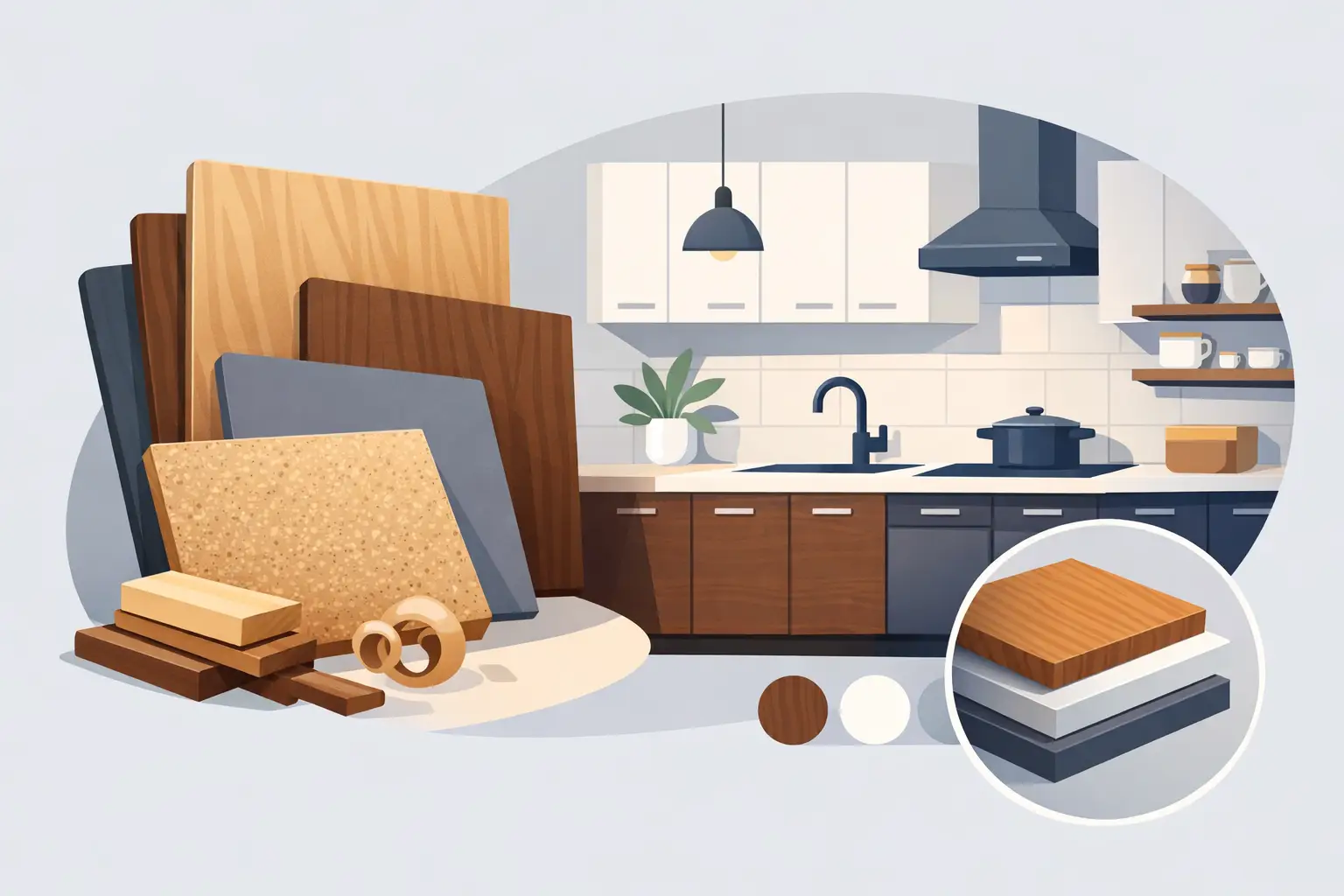
In most kitchens, cabinets are made from a mix of plywood, MDF, particleboard, and solid wood. The exact combination depends on the cabinet line, the budget, and whether the cabinets are stock, semi-custom, or custom.
The cabinet box is often built from plywood or particleboard. Doors and drawer fronts may be solid wood, MDF, or engineered wood with a painted or laminated finish. Shelves may be plywood or particleboard. Decorative trim is often solid wood or MDF, depending on whether the finish is stained or painted.
This mixed-material approach is normal. It is not automatically a sign of low quality. What matters is where each material is used, how thick it is, and how well the cabinet is assembled.
The main materials used in kitchen cabinets
Solid wood
Solid wood is one of the most recognized cabinet materials. It is commonly used for cabinet doors, drawer fronts, face frames, and trim. Popular species include maple, oak, birch, cherry, and hickory.
Homeowners often prefer solid wood for its natural grain and long-term appeal. It can be stained, refinished, and repaired more easily than many engineered materials. If you want a stained finish that highlights natural variation, solid wood is usually the better fit.
That said, solid wood is not always the best choice for every cabinet part. It expands and contracts with humidity, which matters in kitchens and especially in Florida conditions. Used correctly, it performs well. Used in the wrong application, it can move more than engineered panels.
Plywood
Plywood is one of the strongest materials for cabinet boxes. It is made by layering thin sheets of wood veneer with alternating grain direction, which improves stability and strength.
For cabinet construction, plywood is often considered a higher-grade option than particleboard. It holds screws well, resists sagging better, and generally performs better around moisture if properly finished. Many homeowners choose plywood cabinet boxes when they want better durability and are planning to stay in the home long term.
The downside is cost. Plywood usually raises the cabinet price. It can also vary in quality depending on the number of layers and the grade of veneer used.
MDF
MDF stands for medium-density fiberboard. It is made from wood fibers and resin pressed into dense, smooth panels. MDF is commonly used for painted cabinet doors, panels, and trim because it creates a very smooth surface.
One of MDF’s main advantages is consistency. Unlike natural wood, it has no grain pattern, knots, or visible variation. That makes it a strong option for painted finishes. It is also less likely than solid wood to show seasonal movement at joints in painted door styles.
The trade-off is weight and moisture sensitivity. MDF is heavier than plywood, and if water gets into unfinished edges or damaged surfaces, it can swell. It works best when properly sealed and used in the right parts of the cabinet system.
Particleboard
Particleboard is made from wood particles and adhesive pressed into panels. It is widely used in budget-friendly cabinets, especially for cabinet boxes, shelves, and laminated components.
The main reason manufacturers use particleboard is cost. It is less expensive than plywood and can perform adequately in dry, stable conditions. When covered with laminate or veneer and installed well, it can serve its purpose.
Its weakness is moisture and holding strength. Particleboard is more likely to swell if exposed to water and may not hold screws as well as plywood over the long term. For busy kitchens, leak-prone sink bases, or homes where durability is a high priority, this is an area worth checking carefully.
Thermofoil and laminate surfaces
Some cabinets are described by their surface finish rather than the core material. Thermofoil cabinets usually have an MDF core wrapped in a vinyl layer. Laminate cabinets may use MDF or particleboard underneath a decorative laminate surface.
These finishes can be practical, clean-looking, and budget-conscious. They are common in modern and rental property settings because they offer a uniform appearance and are easy to wipe down.
Performance depends on quality and kitchen conditions. Heat, moisture, and age can affect surface adhesion. Near ovens, dishwashers, or other heat sources, lower-grade wraps and laminates may be more likely to peel or wear.
Why cabinet material matters beyond price
When homeowners ask what is kitchen cabinets made of, they are usually also asking how long the cabinets will last. Material affects several real-world issues.
Durability is one of the biggest. Cabinets open and close every day, carry weight, and take occasional impact from cookware, cleaning products, and family traffic. A stronger box material and better hardware usually mean fewer problems later.
Moisture resistance is another major factor. Kitchens deal with steam, spills, sink leaks, and humidity. A cabinet material that performs well in dry conditions may fail much faster if exposed to repeated moisture.
Finish quality matters too. Stained cabinets generally benefit from wood surfaces that show grain well. Painted cabinets often look smoother on MDF door panels. The right material depends on the look you want and how much maintenance you are willing to accept.
Which cabinet parts should you pay attention to?
Not all cabinet components carry the same importance. If you are comparing quotes or product lines, start with the cabinet box, doors, and drawers.
The cabinet box is the structural core. Plywood boxes usually offer better strength and moisture resistance than particleboard boxes, especially around sink bases and heavily used lower cabinets.
Doors and drawer fronts are what you see and touch most. Solid wood is a strong choice for stained finishes, while MDF often works very well for painted doors. Neither is automatically better in every case. The right pick depends on the finish and the kitchen environment.
Drawer boxes deserve close attention because they take constant wear. Solid wood drawer boxes with quality joinery usually outperform thin stapled particleboard drawers. This is one detail that affects daily use more than many homeowners expect.
Back panels, shelves, and interior surfaces matter as well, but these are often secondary compared with overall box construction and door quality.
Best material choices for different goals
If your priority is long-term durability, plywood cabinet boxes with solid wood or high-quality MDF doors are often a strong combination. This gives you structure where it matters and finish flexibility on visible parts.
If your priority is a smooth painted look, MDF doors can be a smart choice. They tend to produce a cleaner painted surface and reduce visible grain patterns that can show through on some wood species.
If your priority is staying within a tighter budget, particleboard or MDF-based cabinet systems may still work, but the installation quality becomes even more important. Proper leveling, secure fastening, sealed edges, and good hardware can make a noticeable difference in how budget cabinets perform.
If your kitchen sees high humidity, heavy family use, or frequent cooking, it is worth investing in better box construction and moisture-resistant materials in vulnerable areas.
A practical way to evaluate cabinets before you buy
Instead of asking only whether cabinets are wood, ask what the box is made of, what the doors are made of, what the drawer boxes are made of, and how the panels are finished. Those answers give a much clearer picture of quality.
You should also ask about thickness, shelf support, hinge quality, and whether the sink base has added protection against moisture. Good cabinets are not just about the material label. They are about how the full cabinet system is built and installed.
For homeowners planning a remodel, this is where working with an experienced contractor helps. A company like AP Interior Solutions can help you match cabinet materials to your budget, finish goals, and the actual conditions in your kitchen instead of choosing based on showroom appearance alone.
The best cabinet material is rarely the most expensive one across every part of the kitchen. It is the combination that fits your home, your usage, and your budget without creating avoidable problems later. Choose with the full project in mind, and your cabinets are much more likely to look good and work hard for years.
Planning a project in South Florida?
AP Interior Solutions remodels kitchens and bathrooms and delivers flawless painting and drywall across Broward, Miami-Dade and Palm Beach. Free in-home estimates, English y español.