What Is Kitchen Cabinets Refacing?
If your kitchen looks worn out but the cabinet boxes are still solid, you may be asking, what is kitchen cabinets refacing, and is it worth doing instead of a full replacement? For many homeowners, refacing is a practical way to update the look of a kitchen without tearing everything out. It can improve appearance, reduce disruption, and keep a remodel focused on what actually needs to change.
Cabinet refacing is not the same as painting cabinets, and it is not the same as installing brand-new cabinetry. It falls in the middle. You keep the existing cabinet framework, then update the visible exterior parts so the kitchen looks newer and more finished.
What is kitchen cabinets refacing?
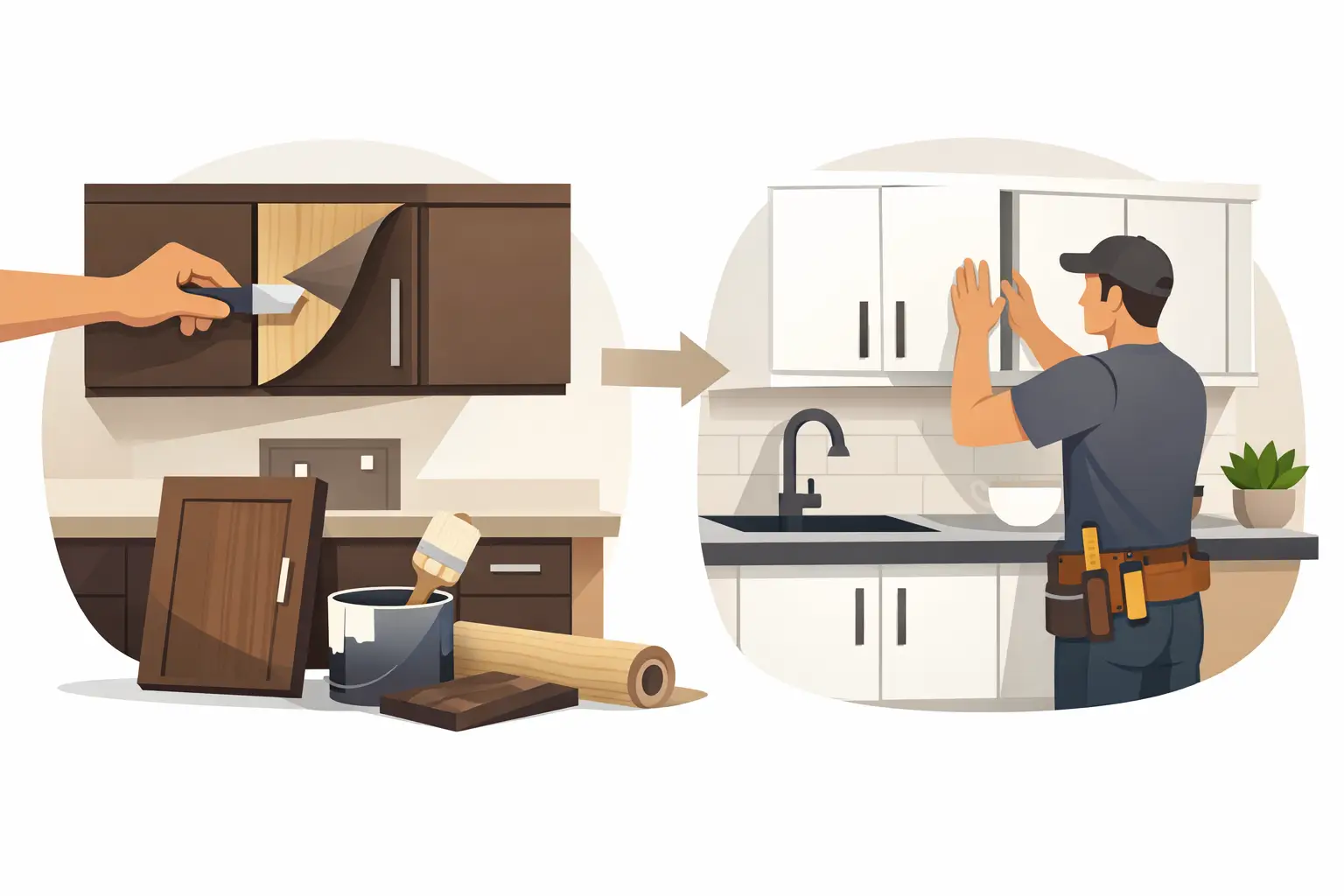
Kitchen cabinet refacing means keeping your current cabinet boxes while replacing or covering the exposed exterior surfaces. In most cases, the cabinet doors and drawer fronts are replaced, the front frames are covered with a matching veneer or laminate, and new hardware is installed.
The goal is to give the cabinets a new style without removing the main structure attached to the walls. If the cabinet layout works, the boxes are in good condition, and you mainly want a visual upgrade, refacing can be a smart option.
This approach is common in kitchens where the cabinets are dated but still functional. Instead of paying for demolition, disposal, and full cabinet installation, homeowners can put their budget toward a cleaner, more current finish.
How cabinet refacing works
A refacing project starts with evaluating the existing cabinets. The contractor checks whether the boxes are level, structurally sound, and worth keeping. If they are damaged by water, badly warped, or poorly built to begin with, refacing may not be the right fit.
Once the cabinets pass inspection, the old doors, drawer fronts, hinges, and handles are removed. The exposed cabinet frames are then covered with a new finish material that matches the new doors and drawer fronts. Depending on the project, that finish may be wood veneer, rigid thermofoil, or laminate.
After that, new doors and drawer fronts are installed. New hinges, pulls, and knobs complete the update. Some homeowners also choose to add trim, crown molding, soft-close hardware, or new end panels to give the cabinets a more custom appearance.
The inside of the cabinet boxes usually stays the same unless you choose additional upgrades. That means refacing changes the look of the kitchen most from the outside, where people actually see and use it every day.
What gets replaced and what stays
This is where many homeowners get confused. With refacing, the cabinet boxes stay in place. The cabinet layout also stays mostly the same.
What usually changes is the outer shell that gives the kitchen its visible style. That includes the doors, drawer fronts, hardware, and the exposed face frames or end panels. In some projects, accessories can be added inside the cabinets, but that is separate from the basic refacing process.
So if you are unhappy with the color, finish, or door style, refacing may solve the problem. If you are unhappy with the kitchen’s layout, storage design, or cabinet quality, you may need something more than refacing.
When refacing makes sense
Refacing makes the most sense when your cabinets are structurally sound and your kitchen layout already works for your household. If you do not need to move appliances, change the footprint, or rebuild for better storage, refacing can deliver a strong visual upgrade without the cost of a full cabinet replacement.
It is also a good fit when the cabinet frames are solid wood or quality composite construction and have years of life left. In that case, tearing them out may not be the best use of your budget.
Many homeowners choose refacing when they are updating several parts of the kitchen at once. For example, if you are also doing interior painting, drywall repair, or new laminate flooring, refacing can help modernize the cabinets while keeping the project more efficient and manageable.
When refacing is not the right choice
Refacing is not the answer for every kitchen. If the cabinet boxes are loose, swollen from moisture, cracked, or badly out of square, keeping them may only cover up a larger problem.
It also may not make sense if the kitchen layout is frustrating to use. Refacing does not fix poor workflow, awkward corner cabinets, lack of pantry storage, or a layout that needs to be reconfigured. In those cases, replacing the cabinets may be the better long-term move.
Another limitation is that refacing will not fully transform the inside construction of old cabinets. If shelves are weak, drawers are shallow, or storage is inefficient, some upgrades can be added, but there are limits. A full replacement gives more freedom to redesign everything.
Refacing vs. painting cabinets
Homeowners often compare refacing with cabinet painting because both improve appearance without full replacement. The difference is the level of change.
Painting keeps your existing doors and drawer fronts. They are cleaned, sanded, prepped, and coated with new paint. This can work well when the doors are in good shape and you like their current style.
Refacing goes further. It replaces the doors and drawer fronts and covers the exposed frame surfaces to match. That means you can change not just the color, but also the door profile, finish material, and overall style.
If your cabinets have outdated door designs, damaged drawer fronts, or a mismatched exterior, refacing usually gives a more complete result than painting. If you simply want a color refresh on cabinets that already look good, painting may be enough.
Refacing vs. full cabinet replacement
Full replacement removes the old cabinets and installs new ones from the ground up. That gives you the chance to change the layout, cabinet sizes, storage features, and materials.
Refacing is less invasive because the existing boxes stay in place. That usually means less demolition, less mess, and a shorter project timeline. It can also reduce labor and material costs, although exact pricing depends on the kitchen size, door style, and finish selections.
The trade-off is flexibility. Full replacement gives you a blank slate. Refacing works within the bones of what you already have. Neither option is automatically better. It depends on the condition of the current cabinets and what you want the kitchen to do differently.
What materials are used in cabinet refacing?
The materials used in refacing affect durability, appearance, and price. Wood veneer gives a more natural look and can work well for homeowners who want a stained wood finish. Laminate is often chosen for a clean, durable surface and consistent color. Thermofoil options may also be available depending on the style and cabinet line.
The new doors and drawer fronts can come in a range of styles, from simple shaker profiles to more traditional raised-panel designs. Hardware choices also matter more than people expect. New pulls and hinges can make the finished kitchen feel more current and easier to use.
A good contractor will help match the finish across all visible surfaces so the cabinets look cohesive rather than patched together.
What to expect during the project
Most refacing projects are more straightforward than a full kitchen tear-out, but they still require careful measuring, surface prep, and installation. Precision matters. If the face frames are not wrapped cleanly or the new doors are not aligned properly, the kitchen will show it.
Homeowners should expect some work inside the kitchen, but generally less disruption than a full cabinet replacement. Because the boxes stay in place, there is usually less demolition debris and less impact on surrounding surfaces.
This is also why experience matters. A refacing job has to balance finish work, carpentry, hardware installation, and a clean final fit. Companies that already handle multiple interior trades often have an advantage when cabinet work is part of a broader kitchen update.
Is kitchen cabinet refacing worth it?
For the right kitchen, yes. If your cabinet boxes are solid, your layout works, and you want a noticeable visual improvement without rebuilding the entire space, refacing can be a worthwhile investment.
It is especially useful for homeowners who want an updated kitchen but also want to stay practical about cost, timing, and disruption. That said, it is only worth it when the underlying cabinets are truly worth keeping. A professional inspection should come before any decision.
At AP Interior Solutions, this is the kind of question worth answering honestly. Sometimes refacing is the efficient option. Sometimes replacement is the better call. The right choice is the one that improves how your kitchen looks and functions without paying for work you do not need.
If you are considering a kitchen update, start by looking past the cabinet doors and focusing on the condition of the cabinet boxes, the layout, and how you use the space every day. That usually tells you whether refacing is a smart upgrade or just a temporary cover.
Planning a project in South Florida?
AP Interior Solutions remodels kitchens and bathrooms and delivers flawless painting and drywall across Broward, Miami-Dade and Palm Beach. Free in-home estimates, English y español.